

Framing for Beginners: 10 Things to Know Before You Order
Custom framing can feel like a different language: opens, reveals, rabbets, UV glazing, mat borders. If you are ordering your first frame—or your first accurate custom size—the best payoff comes from learning a few core ideas up front. This guide distills the ten concepts we wish every beginner understood before they clicked “add to cart.”

1. The “art size” is not always the “frame size”
Beginners often measure the paper edge and assume that number becomes the frame’s inside dimensions. In practice, you usually decide an opening (what you want to see) and then add allowances for mats, float space, or manufacturer tolerances. Write down both the maximum image area you want visible and whether the art is full-bleed (edge-to-edge) or has a white border you want to show.
Quick habit
Measure width and height at three points each (top/middle/bottom and left/center/right). Use the smallest width and smallest height as your “safe” art size if the piece is not perfectly square.
2. Mats do more than decorate—they create air and focus
A mat lifts glass away from the surface, adds visual breathing room, and helps the eye lock onto the subject. Thicker mats and wider borders feel more “gallery”; narrow borders feel more editorial. You can skip a mat for some posters, but for photographs and anything signed, a mat is usually the safer long-term choice.
3. Glazing is a conservation decision, not just a finish
“Regular” glass is clear and economical but often lacks meaningful UV protection. UV-filtering options reduce fading from daylight and lamps. Non-glare finishes trade a little crispness for less reflection in bright rooms. “Museum” grades combine low reflection with strong UV protection—ideal for valued work in living spaces with windows.
4. Depth matters for anything not perfectly flat
Coins, pins, textiles, medals, and dimensional paper need depth in the frame package. Standard picture frames are built for thin prints. If your art has texture, plan for a deeper rabbet or a shadowbox-style approach so nothing presses against the glazing.
5. Standard sizes are a shortcut—not a rule
Retail frames cluster around common photo and poster sizes (for example 8×10, 11×14, 16×20, 18×24, 24×36). That is convenient until your art is 1/8″ off or you need a float mount with extra margin. Custom sizing exists to eliminate compromise: you design to the object you actually have.
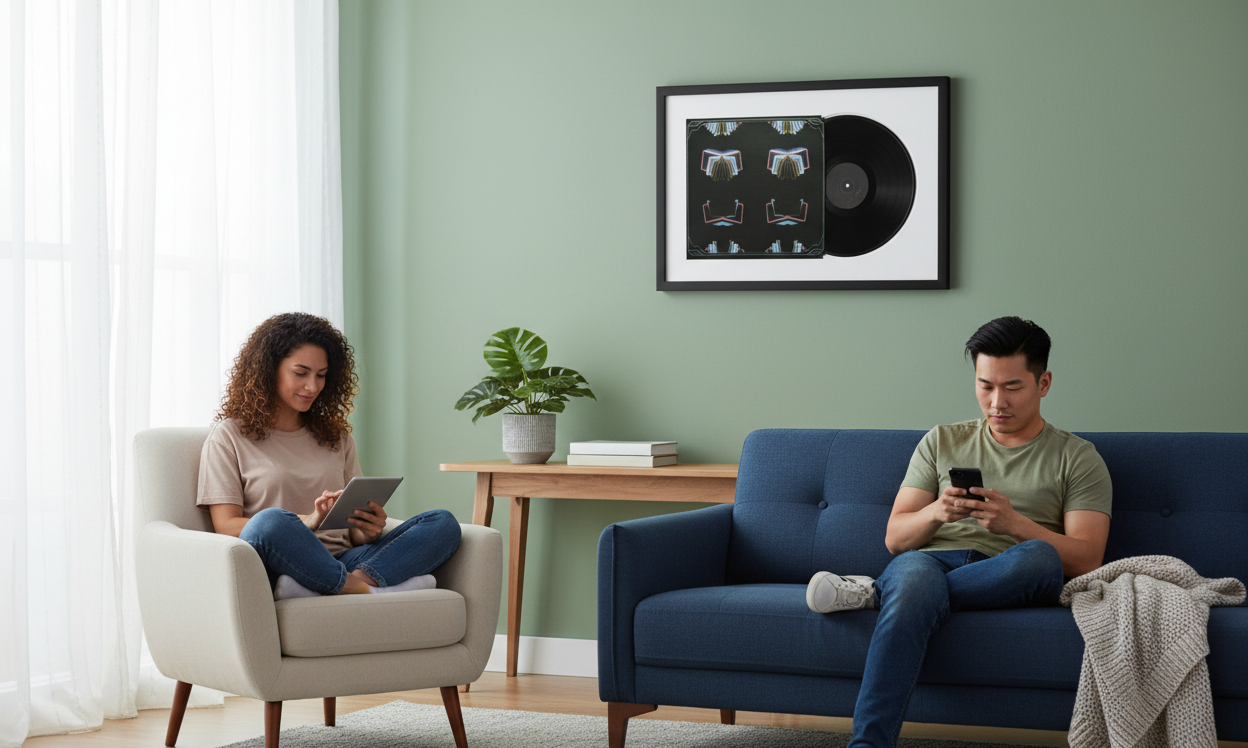
6. Color and profile should follow the room’s contrast
Warmer woods and gold tones tend to feel traditional; black and brushed metals read modern. The “right” moulding is the one that supports the art, not competes with it. When in doubt, choose a quieter profile and let the mat carry color.
7. Framing has three cost buckets: materials, labor, and rework
Budget frames save money by standardizing sizes and thinner glazing. Custom framing costs more because it matches your exact piece and usually uses better joinery and finishes. The hidden cost beginners pay is rework—ordering twice because measurements assumed the wrong opening. Spending ten minutes measuring right beats paying for a second frame.
8. Hanging hardware is part of the plan
Decide early whether you are using wire, cleats, or D-rings, especially for heavy glass. If you are building a gallery wall, consistent sight lines matter more than perfectly symmetrical spacing—work from a center line and tape templates on the wall before you drill.
9. Shipping favors lighter glazing and solid packaging
Large glass panels are heavy and fragile. Acrylic shines for shipping and kids’ rooms even when glass would be ideal in a static gallery setting. If you need glass for clarity, plan padding, corner protection, and realistic carrier limits.
10. The fastest path to confidence is a guided designer
Reading helps, but nothing replaces entering real numbers and previewing moulding, mat borders, and glazing together. A purpose-built designer forces you to resolve the opening, depth, and finish as a single system—so you are less likely to miss a detail.
Ready to design? Open our custom frame designer, plug in your dimensions, and preview finishes before checkout. If you are comparing depth options for objects, start with our shadowbox flows from the designer hub when applicable.
Checklist before you click “buy”
Use this like a pilots’ brief—thirty seconds that saves a week of regret:
- Art size locked – You wrote down smallest width/height if the sheet is imperfect.
- Opening intent clear – Mat, float, or full-bleed; signature lines accounted for.
- Depth sanity check – Anything proud of the mount needs real rabbet depth, not hope.
- Glazing matches the room – Windows and track lights punish the wrong glass choice.
- Hardware fits the wall – Studs located or anchors purchased for the final weight.
FAQs we hear every month
Do I need a mat? Not always—but if the art touches glazing or needs breathing room, a mat or spacer system is doing safety work, not just pretty work.
Is a bigger frame “more impressive”? Scale should track sight lines and furniture—not ego. An oversized frame on small art can feel like a sticker on a billboard unless borders are deliberate.
Can I fix a bad measure later? Sometimes with wider mats; often with a reorder. It is cheaper to pause with a ruler than to rush with a guess.
Where should I start if I am overwhelmed? Read how to measure, then open the designer so numbers become something you can see.
One-page glossary (bookmark this)
- Rabbet – The shelf inside the frame lip that holds the stack.
- Stack – Everything behind the glazing: mats, art, mounts, backing.
- Reveal – Deliberate sliver of color or paper at a window edge.
- Window – Mat opening (or inner perimeter) defining what you see.
- Spacer – Keeps glazing away from textured or dimensional surfaces.
If you paste this list into your notes app alongside your measured width and height, you will sound eerily competent when you email questions—or when you adjust settings in the designer without panic tabs.
Related guides
About CustomFrameSizes Team
Professional framing experts helping you create the perfect custom frame for any project.